
A Southern Gothic Study Guide to Legendary Louisiana
Food, Freaks, and Folklore | an extensive look at who (and what) lurks deep in Louisiana

Hello scholar, welcome to brownstudy_group.
This is our first deep dive into the Southern United States. I wanted to start with Louisiana for a few reasons:
It’s home to New Orleans, one of the most notorious areas for food, freaks, and folklore.
I’m from New Orleans, so it holds a special place in my own heart.
Not only are we going to learn about the freaky historical events and folklore tales that are unique to Louisiana, I also wanted to include some food and phrases that make the area truly stand out. Consider this your all-inclusive guide on what you’d find down in probably the most haunted swamps of the south.
Welcome to brownstudy_group. My name is Wren and I am the moderator of this online study group. I write all articles, create all infographics, run the socials, etc etc. brownstudy_group is my passion project. I am beyond thrilled to have you here. Disclaimer: I am not a certified educator. I am a 20-something woman looking to continue her love of education in humanities one month at a time with likeminded individuals.
For now, brownstudy_group is a FREE community and publication. Pledge today to secure the archive. Please consider subscribing to my personal publication “Quillings” to read more articles and support my work. Any contributions go directly to my next meal (so literally keeping these publications alive).
Food
Below is a list of iconic foods to try while visiting New Orleans and a few personal restaurant recommendations of where to try them.
Gumbo: perhaps the most famous dish from New Orleans, made with andouille sausage, chicken, or seafood, bell pepper, onion, and celery, and thickened with okra or filé powder.
Crawfish étouffée: similar to gumbo, except thinner.
Po’ boy sandwiches: most commonly made with shrimp, po’ boys use New Orleans-style French bread, and come “Undressed” or “Dressed”, meaning with mayonnaise, lettuce, pickles, and tomatoes.
Muffulettas: a sandwich layered with salami, ham, mortadella, Swiss and provolone cheese, and a special olive salad mixture. “The muffuletta sandwich is said to have been created in 1906 at Central Grocery Co. on Decatur Street, New Orleans, Louisiana, U.S., by its delicatessen owner Salvatore Lupo, a Sicilian immigrant.”2
Jambalaya: a true “melting pot” of flavors, jambalaya mixes French roux-making techniques with Spanish tomato flavorings, and African rice usage to create a uniquely New Orleanian dish.3
Oysters, Charbroiled: there’s no shortage of oysters on the half shell in New Orleans, but a local and tourist favorite are hot and crispy charbroiled oysters. Order a dozen of these oysters, topped with garlic butter, parmesan cheese, and herbs, then grilled to bubbling perfection.
recommendation: ACME Oyster House
Turtle soup: traditionally made from the meat of snapping turtles (which has no flavor of its own and it entirely dependent on seasonings), this soup is made with a rich soup base and finished with a touch of sherry. The harvesting of turtles is now illegal, so most turtle soups you will find are made with veal or alligator.
recommendation: Court of Two Sisters (Jazz Brunch)
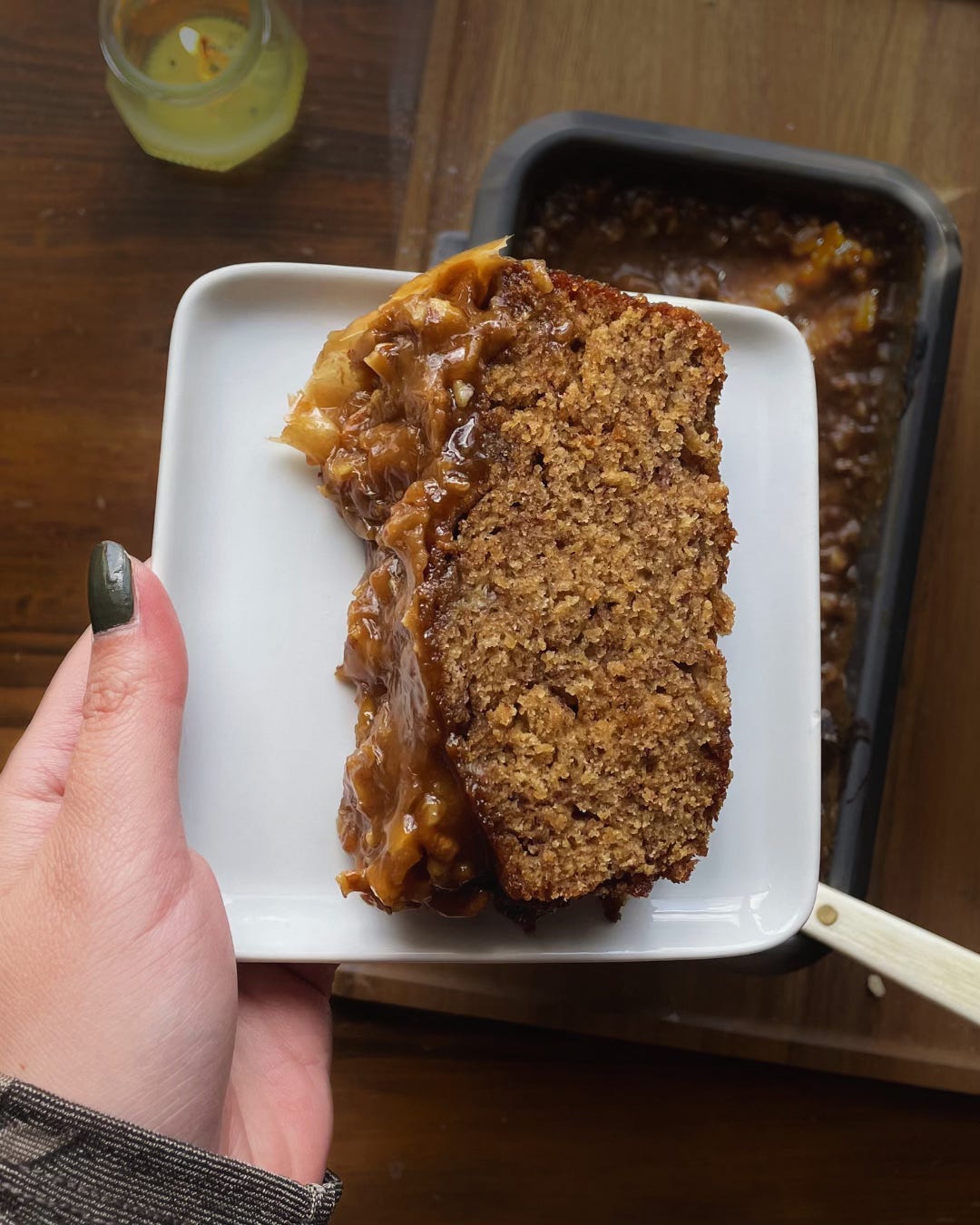
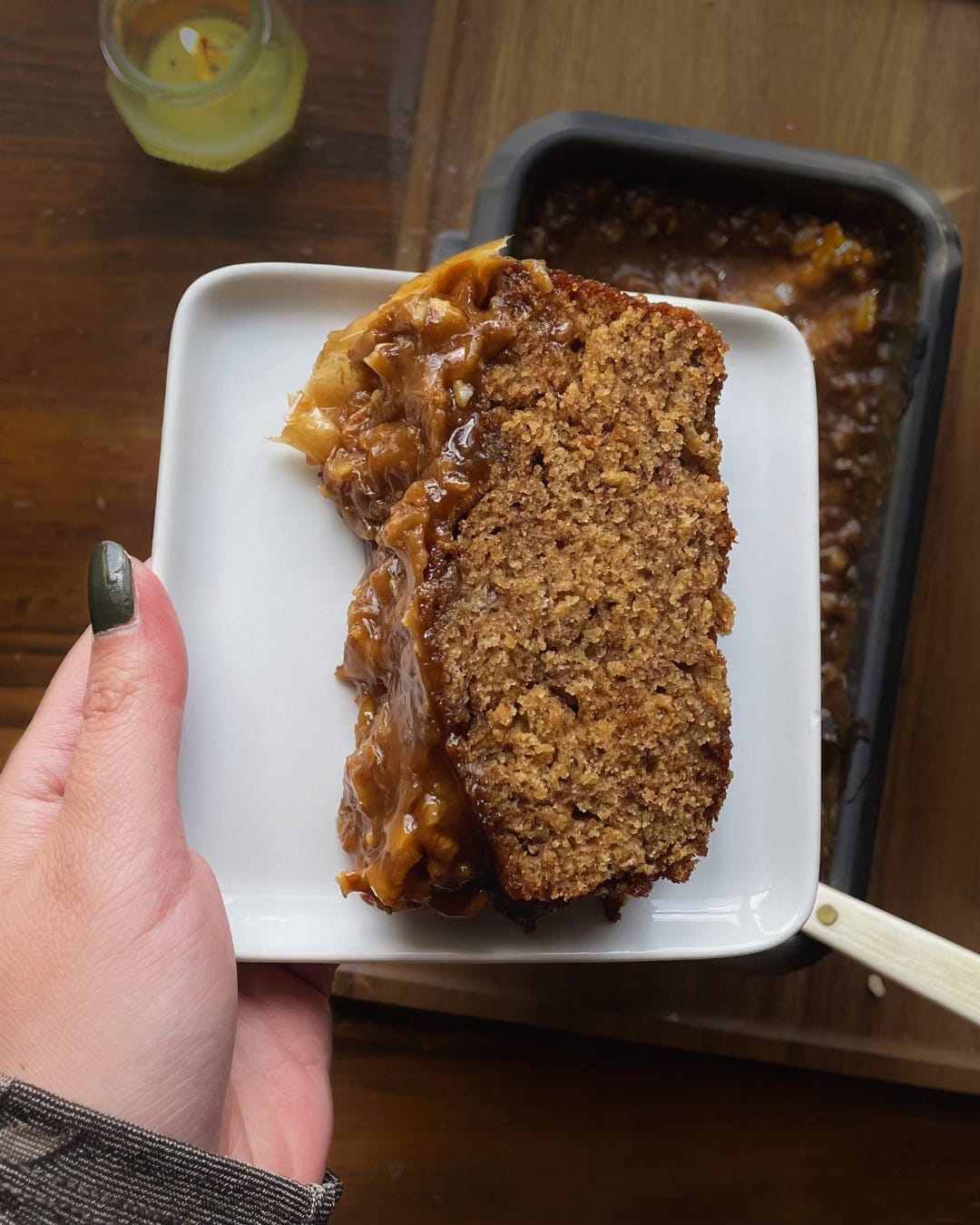
Bananas Foster:Try my Bananas Foster Banana Bread recipe I created for this curriculum
King Cake: a braided bread cinnamon pastry (much like cinnamon rolls), coated with icing and decorated with purple, green, and gold sugar. Served around Mardi Gras, a baby Jesus is hidden inside the cake. The person who is served the piece with a plastic baby Jesus is declared “king” or “queen” for the day and will have good luck for the year. They will also buy the next cake.
Beignets: meaning “fritter”, beignets are a French style donut, and was popularized by Cafe Du Monde.
Chantilly Cake: a vanilla cake layered with Chantilly cream (made with mascarpone, cream cheese, and whipped cream), fresh berries and a berry soak for each layer of cake. It originated in New Orleans, Louisiana, around 2002–2005, created by baker Chaya Conrad for a local Whole Foods Market.
“The Holy Trinity”: bell pepper, onion, and celery.
Freaks
I don’t mean to be offensive by calling this section “Freaks”, but the list is rather “freaky”.
Mardi Gras: You might be familiar with the infamous depiction of Mardi Gras as it exists on Bourbon Street. Beads, beer, and breasts in a daze & craze parade of chaos. While many people participate in Mardi Gras, few understand its origin or what it’s all supposed to actually represent.
Mardi Gras (Fat Tuesday in French) is the day before Ash Wednesday, the beginning of Lent. Lent is a 40-day fasting period where participants vow to give up a sinful vice, food, or another sacrifice to honor Jesus’ 40 days in the wilderness. It focuses on repentance, self-discipline, and communion with God through trial and tribulation.
While Mardi Gras is the day the festivities occur, the actual partying is called Carnival. The idea behind it is basically a big communal “last chance” to indulge in whatever you are planning to give up. If it’s sugar, you’d go on a binge-eating spree of desserts. If it’s drinking, you’d get drunk. If you’re planning abstinence, well…
The colors of Mardi Gras: Justice (purple), Power (gold), and Faith (green)
Catching beads: the act of calling for and catching “throws” symbolizes good luck for the following year. While most commonly thrown are beads, “krewes” (parade float riders) can throw any item, such as toys, shoes, t-shirts, etc.
Floats and Krewes: Each float is based around a theme, usually mythology, pop culture, or political ideologies. It is law that float riders must wear masks to hide their identity. You can visit Mardi Gras World anytime of year, where you can tour Mardi Gras floats and see the creativity up close.
Lafitte’s Blacksmith Shop: claimed to be the “World’s Most Haunted Bar”, Lafitte’s rests at the corner of Bourbon Street and St. Phillip. Started by two brothers, it is said to be frequented by Jean Lafitte, who prefers to linger by the fireplace, his silhouette barely visible in the dim candlelight. But he’s not the only one haunting the premises.
“In the later parts of the 19th Century, the upstairs area was supposedly rented out to a mysterious woman who ended up committing suicide there. Bargoers who have encountered her aura in the years since, report her to be a very talkative soul. On at least several occasions, late at night, she will cozy up next to an unsuspecting victim and whisper sweet nothings into their ear.” 4
Admittedly, the idea of a flirtatious ghost is definitely a rare one, it is rather fitting for the Big Easy.
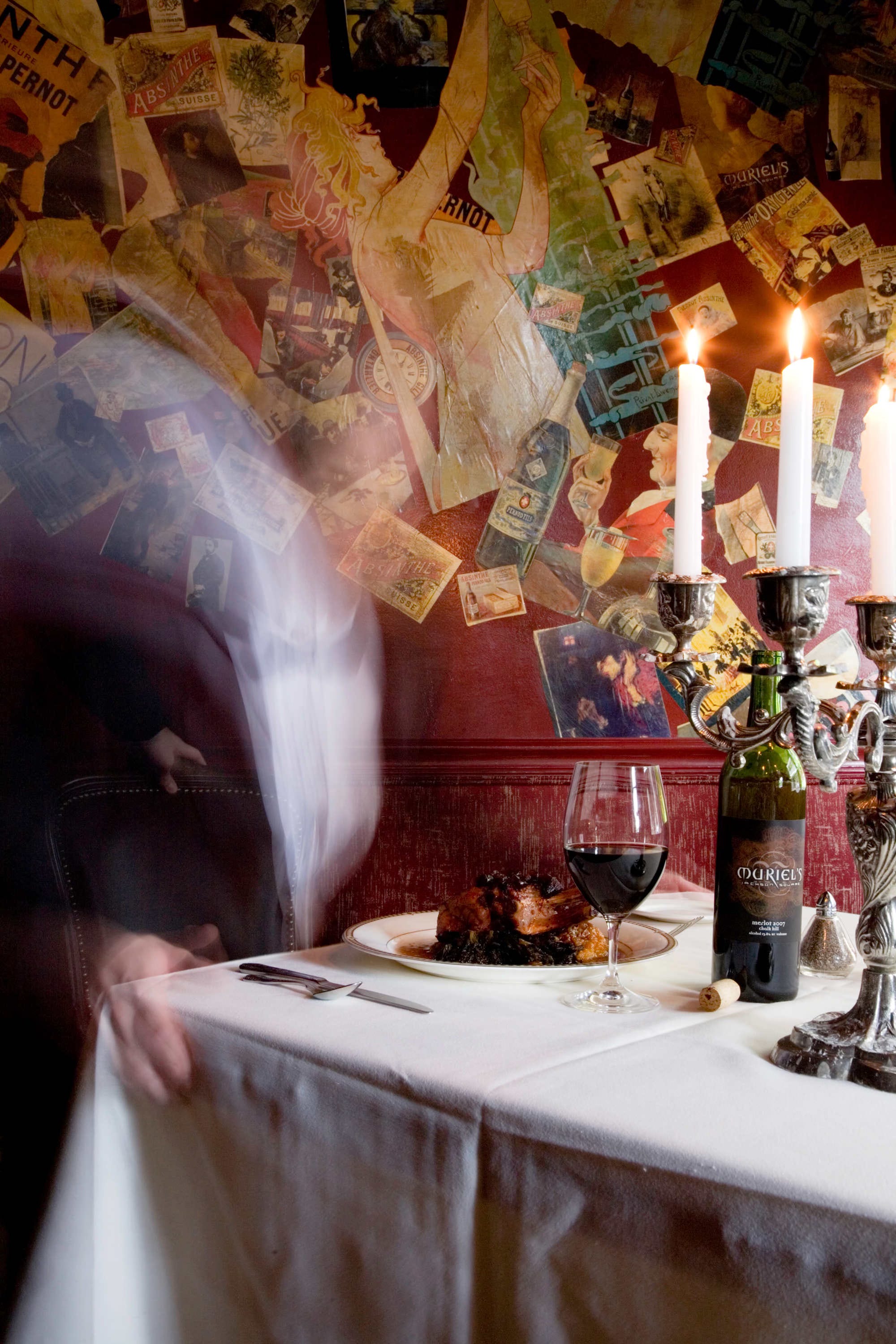
Muriel’s: Complete with a bar, bistro, and seance rooms, Muriel’s actively welcomes wandering spirits to their incredible establishment. Their most frequent visitor is believed to be .Pierre Antoine Lepardi Jourdan.
“(he) is still with us today in spiritual form on the same piece of property that is now Muriel’s. His ghost doesn’t appear in human form, but instead as a glimmer of sparkly light wandering around the lounge. Our Seance Lounges on the second floor are named as such because it is believed that this is where Jourdan spends the majority of his time. Patrons and employees of Muriel’s have also witnessed objects being moved around throughout the restaurant. We believe Mr. Pierre Antoine Lepardi Jourdan never left his true love and home in New Orleans; he continues to reside here to this day.”5
The Devil Man of Algiers: “across the river”, “on the West Bank” Algiers rests on the outskirts of New Orleans, but is in no way excluded from the freakish incidents that happen down south. Drunkard, Demon, or Demigod, the people of Algiers were terrorized by a hairy, wild-eyed man who could vanish, turn into a baboon, and had an insatiable appetite for whiskey.
The story begins with a couple who were on the way home from dancing. they were stopped by a strange man on the street who asked for a ride. They said no and drove off, until they ran into the same man again and again, miles apart. After returning home safely and relaying the story to friends, they were encouraged to tell the police about what happened.
The police seemed to take the claim seriously, eventually making an arrest of the man named Clark Carleton, who not only confessed to being the town’s local haunt, but also claimed to be “greater than the devil himself” and being sent by “a great spiritual monarch he named as King Zulu”.
Real or not, local bars claiming that the disorderly entity was commonly a regular brought in business.6
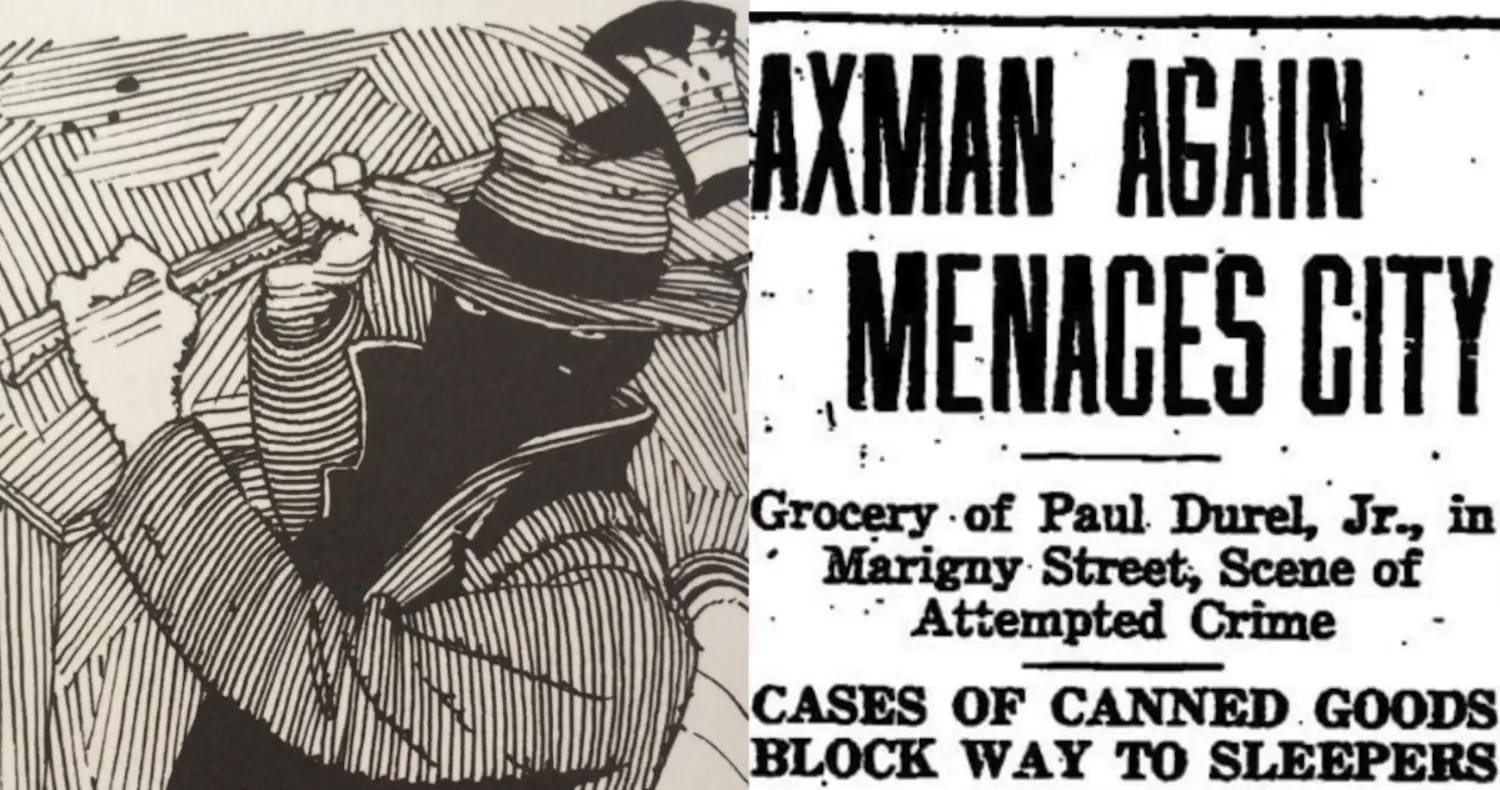
The Axeman: jazz lover and horrifying serial killer, the axeman is credited with as many as 17 killings in the early 1900s. As expected, he often killed with an axe, rumored to have been owned by his victims.
“On March 13, 1919, a letter purporting to be from the Axeman was published in newspapers, saying that he would kill again at fifteen minutes past midnight on the night of March 19 but would spare the occupants of any place where a jazz band was playing. That night all of the city's dance halls were filled to capacity, and professional and amateur bands played jazz at parties at hundreds of houses around town. There were no murders that night.”7
He was never found. The murders ceased as randomly as they began.

Folklore
Rougaroux: a creature created to keep children in line, the rougaroux originates from the French loup-garou, a shape-shifting swamp dweller with the body of a man and a head of a wolf. You can visit a life-sized depiction of the rougaroux at the Audubon Zoo in New Orleans.
Legend has it that a person will turn into a rougaroux is they break Lent for 7 consecutive years, are cursed by a witch, or spot a rougaroux and learn its true identity.
Additionally, the rougaroux is often portrayed as a mischievous trickster, such as a leprechaun. People might say “a rougaroux was here last night” if their house is trashed after a party, or alternatively “I was running the rougaroux last night” if they partied too hard and don’t remember the events from the night before.
Letiche: another mischievous swamp dwelling creature is also used to scare children. Litche are thought to be alligator-humanoids that are the result of unbaptized children, children abandoned in the swamp and raised by alligators, or perhaps a combination of both. They are accused of tipping and scratching boats and attacking people by dragging them into water.
Marie Laveaux: a devout catholic and holistic healer, Marie Laveaux was a popular figure in the 1800s. She was widely sought after from gris-gris, which are West African amulets (bags containing herbs, scriptures, oils, etc. worn around the neck) believed to bring the wearer good luck and protection.
It is thought that her legacy was continued by her daughter who was given the same name as she, which stirred rumors that she was immortal or could not age.
Marie was a beautiful and dynamic woman who balanced her devout Catholic upbringing and belief with the ‘roots’ of her voodoo practice.8
Julia Brown: thought to be another hoodoo practitioner and healer to the common folk of the marsh who is credited with cursing an entire town and invoking a hurricane to wipe it almost entirely off the map. In her old age, she could be heard eerily singing the phrase, “when I die, I’m taking the whole town with me”. According to folklore, the townsfolk, weary of her condemnation, all attended her funeral. It was here that a hurricane descended upon them all, killing and destroying most of the residents and their homes.9
Participate in this month’s Folklore Inspired Writing Prompt.
All you have to do is comment your poem, prose, or short story or send your piece privately in the group chat. All brownstudy_group members are invited to participate in writing prompts. Submit your work here.
Further studying:
Lagniappe-
“Lagniappe”: “a little extra”
“laissez le bon temps rouler”: “let the good times roll”

https://en.wikipedia.org/wiki/Filé_powder#:~:text=Choctaw%20Native%20Americans%20of%20the,occasion%20dish%20for%20native%20tribes.
https://en.wikipedia.org/wiki/Muffuletta
https://www.thesilenttaskforce.org/post/the-cultural-melting-pot-of-jambalaya-how-louisiana-s-diverse-heritage-shaped-this-iconic-dish
https://www.forbes.com/sites/bradjaphe/2020/08/20/is-this-the-worlds-most-haunted-bar/
https://muriels.com/about/ghost/
https://paranormal-world.fandom.com/wiki/The_Algiers_Devil-Man
https://en.wikipedia.org/wiki/Axeman_of_New_Orleans
https://voodooneworleans.com/about-house-of-voodoo/marie-laveau/
https://hnoc.org/publishing/first-draft/julia-brown-curse-hoodoo-hurricanes-and-storm-swamped-ruddock